Hamburg-based firm embeds hydrogen fuel cells in two Samskip cargo vessels
In a significant move towards decarbonizing the maritime industry, Ballard Power Systems, eCap Marine, Samskip, and ABB have collaborated on a landmark project. The partnership aims to reduce emissions in the maritime sector by powering two Samskip vessels operating between Norway and the Netherlands with hydrogen fuel cells.
The largest recent order for marine fuel cell modules is the 6.4 MW supply of 32 FCwave™-200 kW engines by Ballard Power Systems to eCap Marine. This order, confirmed in mid-2025, stands as one of the largest marine fuel cell engine orders in history.
The FCwave modules, developed by Ballard, are the world's first DNV type-approved fuel cell module for marine use. This approval ensures compliance with international maritime safety and design standards.
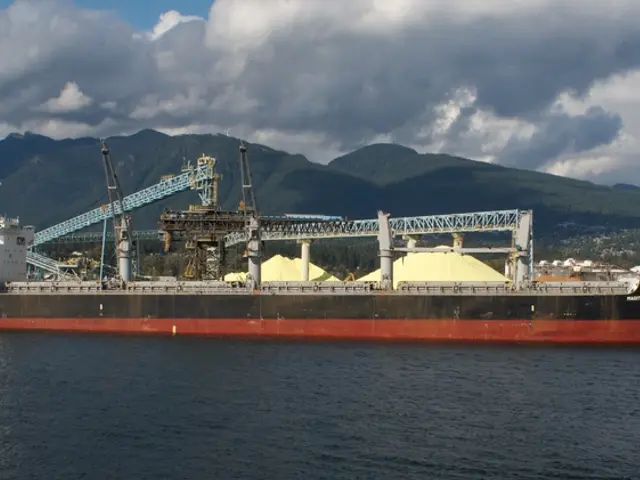
Each of the two 135-meter Samskip SeaShuttle container vessels will be powered by a 3.2 MW hydrogen fuel cell system, composed of multiple 200 kW modules. Diesel generators will serve as backup power sources. The ships are expected to operate on routes between the Netherlands and Norway in the future.
The collaboration between Ballard and eCap Marine, which began in 2021, has expanded with this order. eCap Marine integrates the fuel cells into green marine propulsion systems, contributing to decarbonization efforts.
Samskip has signed a contract with ABB for the delivery of a "comprehensive power distribution system" for the two hydrogen-powered container ships. The order is being funded by Enova, the Norwegian government agency for energy and climate initiatives.
Lars Ravens, CEO of eCap Marine, emphasized the importance of the continued collaboration with Ballard in decarbonizing the maritime industry. Samskip aims to achieve net-zero emissions by 2040, and the fuel cell ships are expected to contribute significantly to this goal.
The modules will be integrated into the propulsion systems of the two new container ships owned by Samskip. Delivery of the modules from this order is scheduled for 2025 and 2026. Each of the 32 FCwave modules has a power output of 200 kW.
The FCwave project, consisting of 32 modules, has a total power output of 6.4 MW. Ballard positions its FCwave modules as a practical propulsion solution for ships, ferries, and other large marine vessels. The collaboration between the involved parties is a step towards cleaner and more sustainable shipping practices.
Using green hydrogen generated from renewable energy like wind and solar, the project is expected to avoid approximately 25,000 metric tons of CO₂ emissions annually, advancing maritime decarbonization. This order exemplifies growing confidence and scaling of hydrogen fuel cell propulsion in maritime transport, addressing strict emission regulations and signaling a significant step toward cleaner shipping.
The collaboration between Ballard Power Systems and eCap Marine has led to a significant order for 6.4 MW of marine fuel cell modules, marking one of the largest in history. This order supports Samskip's aim to attain net-zero emissions by 2040, with the fuel cell system to power their vessels contributing significantly to this goal. The innovative FCwave™-200 kW engines, developed by Ballard and DNV type-approved for marine use, are set to be integrated into the propulsion systems of Samskip's new container ships. This project, consisting of 32 modules, is expected to generate 25,000 metric tons of CO₂ emissions annually, demonstrating the potential of hydrogen fuel cell propulsion in maritime decarbonization and signaling a step forward in cleaner and sustainable shipping practices.Finance plays a role in this project, as the order is being funded by Enova, the Norwegian government agency for energy and climate initiatives. Additionally, the collaboration between Ballard Power Systems, eCap Marine, Samskip, ABB, and industry leaders in the field of environmental-science and technology is instrumental in ensuring the decarbonization of the maritime industry, thereby contributing to the global fight against climate change.