
"Innovation is blossoming within the realm of copying equipment"
China's economic growth remains solid but faces notable structural challenges, as reported by Frank Sieren, a renowned German China expert, during his lecture at Pforzheim University. Sieren, who has lived in Beijing for almost 30 years and has written numerous bestsellers about China, delivered a thought-provoking talk titled "Superpower China: Irresistible Ascendant or Colossus on Shaky Feet?"
In the first half of 2025, China's GDP grew by about 5.2-5.3%, slightly exceeding the government’s annual target of around 5%, supported by consumption stimulus measures and reforms to tackle sectoral overcapacity[1][3][5]. However, quarter-on-quarter growth has slightly slowed, reflecting underlying issues such as high youth unemployment, weak income growth, and a struggling real estate sector[1][2].
Regarding innovation, China continues to emphasize technological upgrading and new growth areas as priorities. The government’s reforms and support measures focus not just on stabilizing consumption but also on fostering innovation-driven growth, including in sectors like electric mobility and advanced manufacturing[5].
In the context of special economic zones (SEZs), while the specific 2025 details are limited in the search results, historically, SEZs have been crucial to China’s export-led growth and industrial upgrading. Current government reforms likely continue to support these zones as hubs of innovation and investment, especially in emerging industries such as electric vehicles (EVs) and green tech, to sustain economic dynamism amid broader trade uncertainties[1][5].
Electric mobility in China remains a strategic focus within its innovation agenda. China is the world leader in electric vehicle adoption and manufacturing, benefiting from policies promoting clean technologies and investments in EV infrastructure. This aligns with the government’s push for “new growth points” in the economy and technological upgrading to offset challenges in traditional sectors[3][5].
The rapid development of China in recent decades is referred to as an "epochal change" by Sieren. Despite problems such as youth unemployment of around 20 percent, these are cyclical and expected to decrease in two to three years[4]. Sieren is considered one of the few in Germany who realistically evaluates the rise of China and has warned against underestimating it.
The West must provide more compelling reasons for its interests than in the past, as China has caught up with established economic nations, changing the global world order. China became known as the "world's factory," gradually increasing its share of the global economy with low-cost, high-quality products. However, production costs in China have increased, and the country is no longer the only viable option for certain industries, such as electric mobility[2].
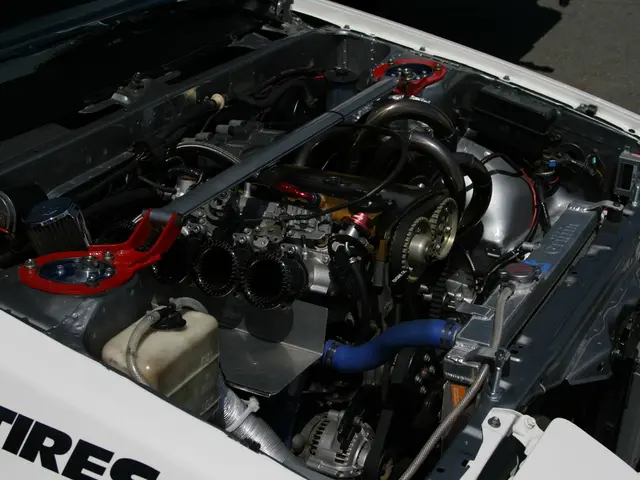
China's human rights abuses are a point of criticism, but cooperation is important due to the need for China's involvement. For a long time, the West believed that China could only copy, not innovate, particularly in the case of the internal combustion engine. However, China has focused on electric mobility and battery research, setting new rules in the global automotive market[3].
China has no significant foreign debt, low inflation, and is expected to grow at 5.4 percent, compared to Europe's 0.7 percent. China has approved autonomous flying drones for everyday use, which is a simpler achievement than autonomous driving. The country aims to return to a 30% share of the global economy by innovating, leaving the West to reconsider its strategies in dealing with this emerging superpower[1].
In summary, China’s GDP growth is steady at about 5.2-5.3%, slightly above targets but slowing quarter-to-quarter due to structural economic challenges like real estate fragility and labor market inefficiencies[1][2][3]. The government continues to prioritize reforms and support measures to boost consumption, employment, and technological innovation, with SEZs playing a key role in these efforts[1][5]. Innovation-driven sectors, especially electric mobility, are central to China’s economic strategy for technological advancement and sustainability[3][5]. Export growth is facing headwinds due to global uncertainty and trade tensions, underlining the importance of domestic innovation and SEZ-enabled industrial upgrading[2][4]. This paints a picture of a resilient but evolving Chinese economy, leveraging reforms, consumption stimulus, SEZs, and electric mobility to navigate complex global and domestic pressures.
Artificial-intelligence development is a priority for China's government, with reforms and support measures aimed at fostering innovation-driven growth in this sector as well as others like electric mobility and advanced manufacturing. Despite issues like high youth unemployment, weak income growth, and a struggling real estate sector, China's economic growth remains solid, and the country continues to emphasize technological upgrading and new growth areas as a means to sustain its economic dynamism amid broader trade uncertainties.