
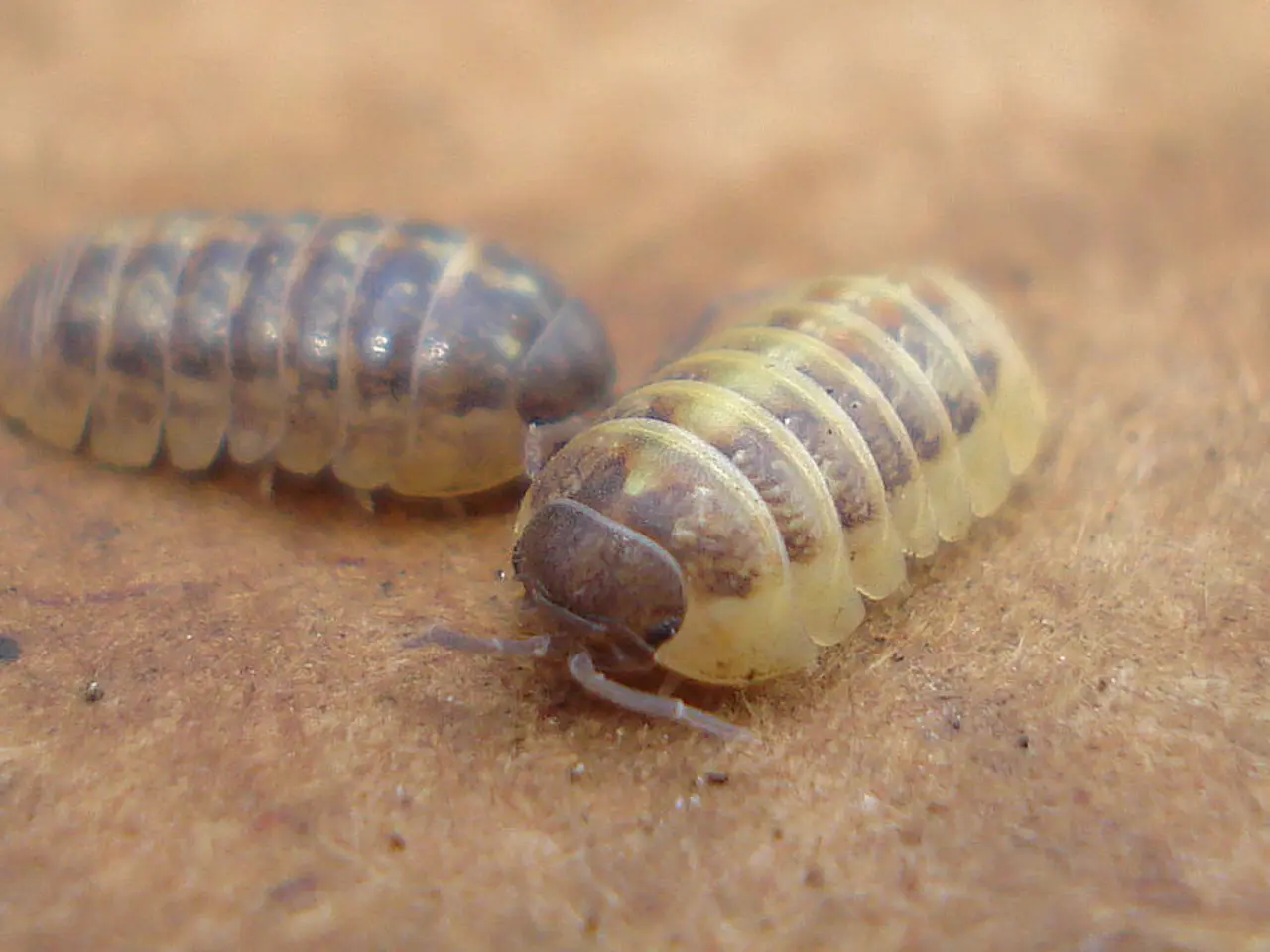
The potential for AI to enhance insect farming productivity explored.
In the rapidly evolving world of agriculture, Artificial Intelligence (AI) is making a significant impact, particularly in the realm of insect farming. AI is playing a pivotal role in optimizing and managing insect farms through early disease and pest detection, precision monitoring, and efficiency improvements.
Insect farms, much like traditional crop farms, benefit from AI technologies that enhance pest and disease forecasting. By detecting potential threats at their inception, farmers can implement timely interventions, preventing large-scale infestations and disease spread.
One of the key roles of AI in insect farm optimization and disease management is early disease detection. AI systems utilise image recognition, such as convolutional neural networks, and sensor data to identify diseases and pests at their earliest stages, before visible damage occurs. This enables quicker, targeted responses, preventing outbreaks.
Automated monitoring is another crucial aspect of AI's role in insect farming. Smart insect monitors and automated systems collect continuous data on insect populations and environmental conditions. AI analyses this data to detect anomalies indicating disease or pest pressure, reducing labour and human error while providing real-time insight into insect health and behaviour.
Precision interventions are another benefit of AI's integration into insect farming. By accurately locating infected or pest hotspots, AI guides farmers to apply treatments such as biocontrol agents or targeted pesticide spraying only where necessary. This reduces chemical use and operational costs, improving sustainability and farm profitability.
AI also contributes to efficiency improvements by integrating environmental, climate, and historical data to optimise farm management decisions, including resource use, feeding schedules, and breeding programs. This enhances insect growth rates and yield quality.
Moreover, AI supports sustainable practices in insect farming by minimising pesticide use and promoting precise disease management. This contributes to a reduced environmental impact and the promotion of eco-friendly production approaches.
While much AI research currently focuses on crop pest and disease management, the principles and technologies translate effectively to insect farms due to parallel needs for continuous monitoring, early detection, and precision control. Emerging solutions, such as automated insect monitors and smart greenhouses equipped with AI, demonstrate the growing application of AI in insect farming contexts.
One such solution is Entoverse, a Singapore-based startup that has developed an AI-based system to help manage cricket farms more efficiently. The more sensors a farmer installs, the more accurate the AI system's recommendations become. The integration of ChatGPT into Entoverse's engine could help provide tailored advice to farmers.
Insect farming is an emerging trend in the sustainable solution to the growing demand for animal protein. Insects are efficient feed converters, requiring less water and land compared to traditional livestock. They are also a rich source of protein and vitamins, and insect farming has a low environmental impact.
As knowledge spreads, more specialists enter the field, facilities become more automated, and farms become more efficient, AI is expected to become even more prevalent in insect farming. Entoverse plans to develop AI systems for farming various insects, including black soldier flies, grasshoppers, and mealworms.
In conclusion, AI is transforming insect farming into a smarter, more resource-efficient, and resilient agricultural practice. By detecting diseases early, monitoring insect health efficiently, applying precise treatments, and improving overall farm productivity and sustainability, AI is set to play a crucial role in the future of insect farming.
Water management in insect farms can be improved through AI, as it assists in optimizing feeding schedules and resource use, thus enhancing insect growth rates and farm profitability.
AI technology also has implications for the food-and-drink sector, particularly in the context of insect farming, where it can contribute to eco-friendly production by reducing the use of pesticides and promoting sustainable practices.
In the realm of business and finance, the integration of AI systems, like Entoverse's, aids insect farmers in making informed decisions, fostering greater efficiency, and ultimately, boosting profitability in the insect farming industry.